Myths about Cloth Diapers Debunked - Parent holding a fully clothed baby beside neatly arranged modern cloth diapers in a nursery.

5 Common Myths About Cloth Diapers (Debunked!)

  • 17Minutes
  • 1Views

5 Common Myths About Cloth Diapers (Debunked!)

Cloth Diapers are often described as too complicated, unhygienic, leaky, expensive or impossible to use alongside disposables. These concerns can make reusable diapers seem less practical than they really are—but they are not universal truths.

Modern Cloth Diapers can be straightforward, absorbent and hygienic when they are correctly fitted, changed regularly and washed and dried properly. However, they are not automatically cheaper, easier or more sustainable for every household. The outcome depends on the diaper system, your baby’s needs, local costs, laundry access, drying conditions and how long the diapers are used.

Here are 5 Common Myths about Cloth Diapers, along with the practical reality behind each one.

The Short Answer: Are the Common Myths about Cloth Diapers True?

Most Cloth Diaper myths contain a small element of truth, but they are usually too broad to apply to every family.

Modern designs are different from traditional folded cloth secured with pins. Some are simple to put on, while others involve separate inserts, covers or more preparation. Cloth Diapers can be hygienic, but only when they are changed, handled, washed, dried and stored appropriately. They can sometimes reduce diapering costs, but laundry and replacement expenses must be included in the calculation.

And using cloth does not have to be an all-or-nothing decision. Families can use reusable diapers full-time, part-time, during the day, at home or whenever their routine allows.

The most useful question is not, “Are cloth diapers always better?” It is: “Can this diaper system work with my baby’s needs and my household’s routine?”

Myth 1: Cloth diapers are too complicated

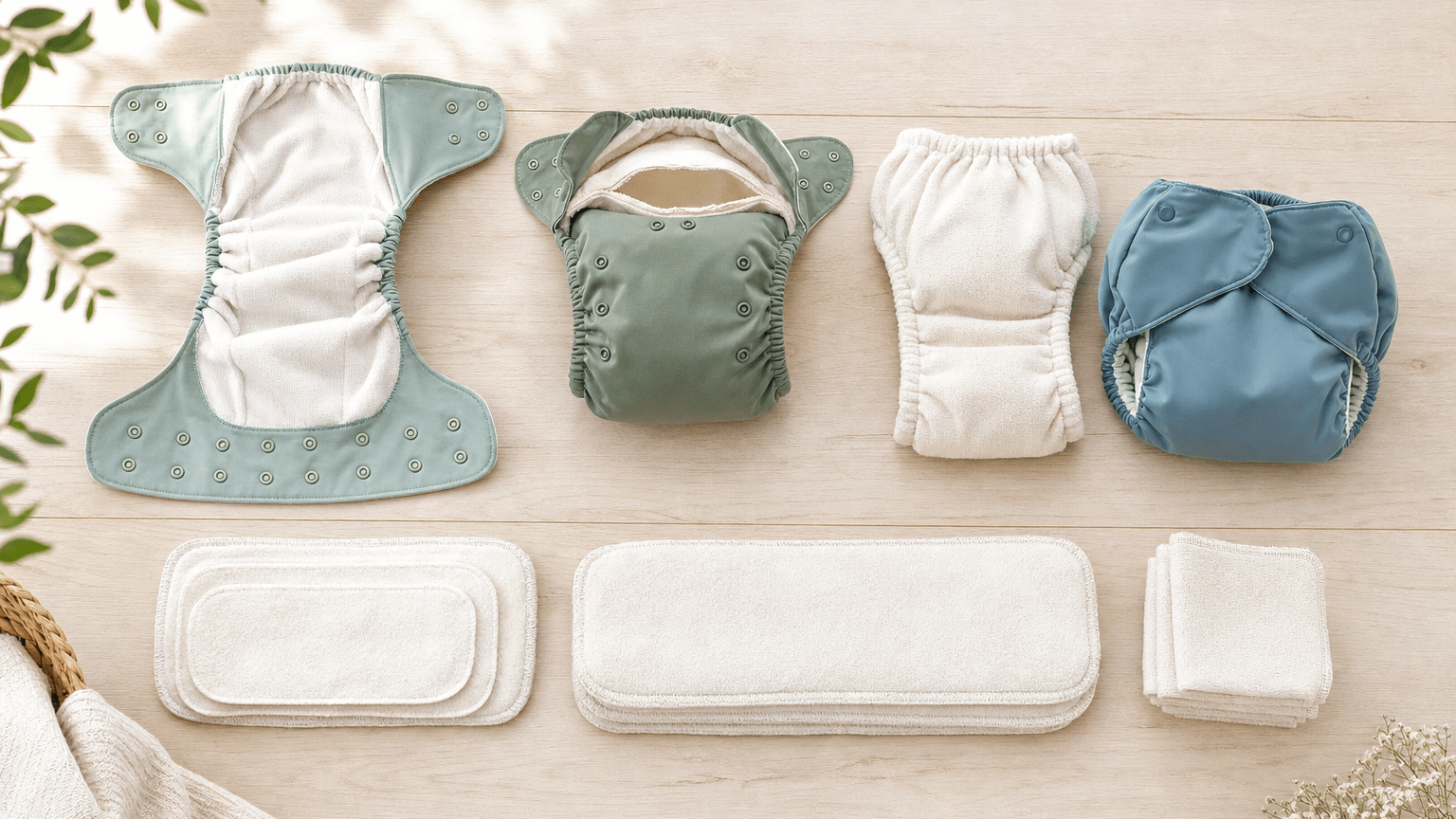
Modern cloth diaper styles with inserts, a fitted diaper and a waterproof cover arranged on a table.

Modern designs are different from traditional pin-and-fold systems:

When people imagine cloth diapers, they may picture folded fabric, safety pins and a separate waterproof cover. Those systems are still available, but they are not the only option.

Modern reusable diapers commonly include:

  • All-in-one diapers, where the absorbent and waterproof parts are attached
  • Pocket diapers, with an opening for absorbent inserts
  • Fitted diapers, which are absorbent but usually need a separate cover
  • Adjustable-size diapers, designed to fit across more than one stage of growth

Many use snaps, hook-and-loop closures and elasticised leg openings. All-in-one and pocket systems may feel closer to putting on a disposable diaper than using a traditional prefold system.

That does not mean every cloth diaper is equally simple. A pocket diaper may need its inserts prepared before use. A fitted diaper and cover involve more than one piece. An all-in-one can be convenient but may take longer to dry, depending on its construction and drying conditions.

“Simple” does not mean effort-free:

Cloth diapering still has a learning curve. Caregivers may need to learn how to:

  • Adjust the waist and leg fit
  • Place inserts correctly
  • Match absorbency to the baby’s needs
  • Store used diapers
  • Manage stool appropriately
  • Follow a practical wash-and-dry routine

This preparation is different from buying and disposing of a ready-to-use diaper, so it is reasonable to expect some additional organisation.

The easiest system for one family may not be the easiest for another. A household with limited drying space may prefer a faster-drying design. A caregiver who wants fewer separate pieces may prefer an all-in-one. Someone managing heavier wetting may value a system with adjustable inserts.

Choose a system around the people who will use it:

Think about everyone who changes the baby — not just the person researching cloth diapers. Grandparents, babysitters and childcare providers may be more comfortable with a simple snap-in system than one requiring multiple layers.

Some families use one system at home and a simpler configuration for childcare. Others begin with a small trial kit instead of buying a complete collection immediately. This gives caregivers a chance to test the fit, absorbency, drying time and wash routine before making a larger purchase.
Myth 2: Cloth diapers are unhygienic or cause more diaper rash

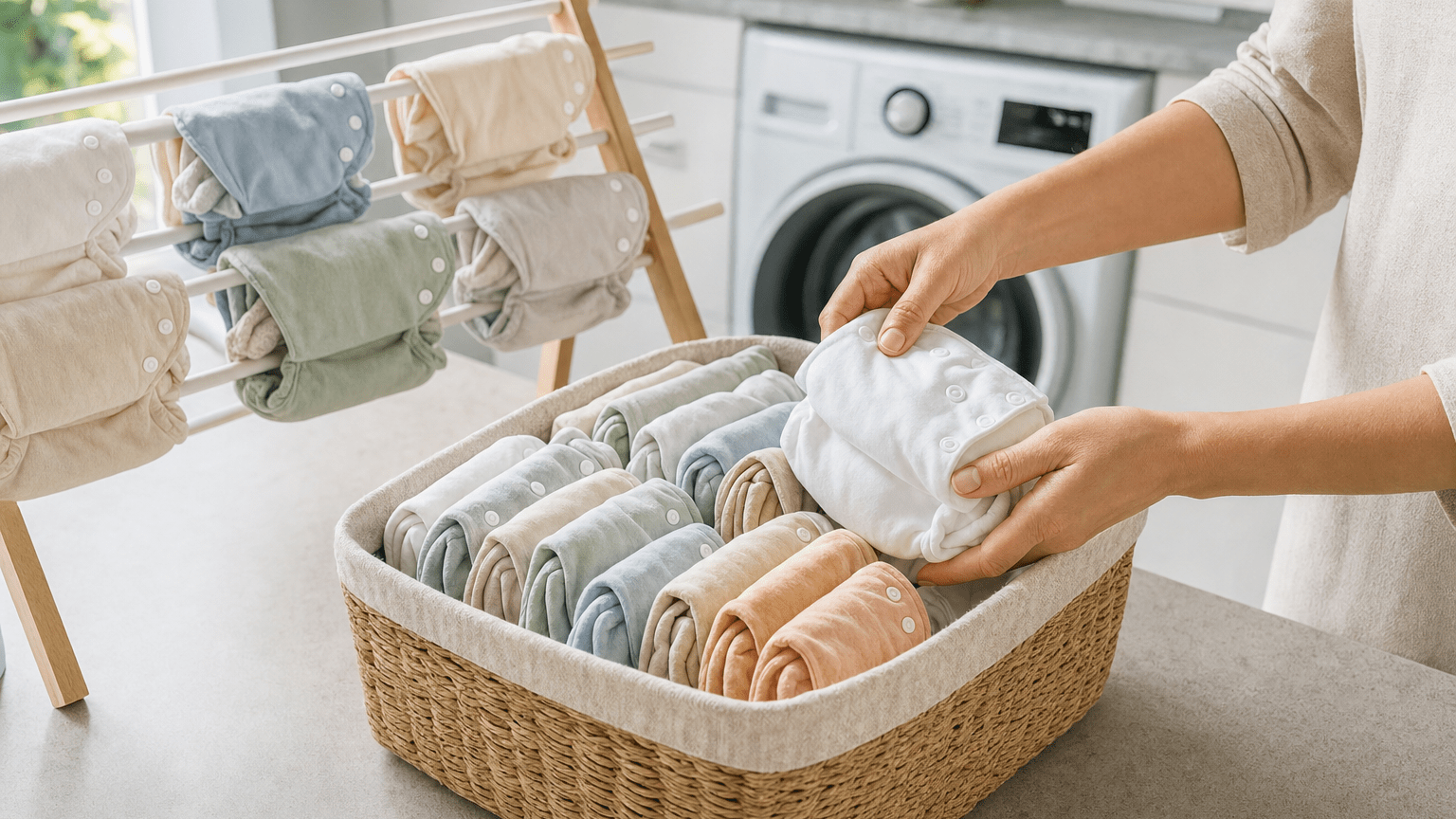
Adult hands storing clean, dry reusable cloth diapers in a woven basket beside a washing machine and drying rack.

Hygiene depends on the Care Routine:

Reusable diapers are not inherently unhygienic. Cleanliness depends primarily on what happens after the diaper is used.

A suitable routine generally includes:

  • Changing the baby regularly
  • Handling soiled diapers safely
  • Storing used diapers appropriately
  • Washing them effectively
  • Rinsing according to the product and household routine
  • Drying them completely
  • Keeping clean diapers in a dry, suitable place

Simply putting a diaper through a wash cycle does not guarantee that it has been cleaned effectively. Detergent suitability, water hardness, machine loading, rinsing, drying conditions and storage can all affect the result.

If diapers develop persistent odour, residue or reduced absorbency, the wash routine may need reviewing. Product-specific care instructions should take priority over generic advice.

Used-diaper handling needs a Clear Plan:

Stool management depends partly on the baby’s feeding stage and the type of waste. Breastfed and formula-fed babies may require different handling approaches. Once a baby is eating solids, solid waste should not simply remain in household laundry. Families should follow appropriate disposal practices and the diaper manufacturer’s guidance, while also considering local sanitation requirements.

There is no single universal method for soaking, sanitising or treating every reusable diaper. Some products may be damaged by particular treatments, and local guidance may differ. Avoid assuming that a routine suitable for one material or household will suit all products.

Washing every two or three days is sometimes suggested as an example routine, but it is not a mandatory schedule for every family. The practical frequency depends on:

  • The number of diapers available
  • How used diapers are stored
  • Climate and humidity
  • Washing-machine capacity
  • Water availability
  • Drying time
  • Manufacturer instructions

The important principle is to avoid prolonged damp storage and to ensure diapers are fully dry before putting them away.

Cloth Diapers do not Automatically Prevent or cause Rashes:

Diaper-area irritation can be associated with moisture, heat, friction, delayed changes or sensitivity to products and materials. These factors can occur with both cloth and disposable diapers.

A breathable fabric may feel comfortable, but that alone does not prove that cloth diapers prevent rashes. Likewise, using cloth does not automatically cause skin problems. The baby’s individual sensitivity, change frequency, fit and the products used alongside the diaper all matter.

If redness persists, worsens, appears infected or does not improve with appropriate care, seek medical advice. A rash should not automatically be blamed on the diaper material.

The reality: Cloth diapers can be hygienic when they are changed promptly and washed, dried and stored properly. They are not proven to prevent diaper rash simply because they are reusable.
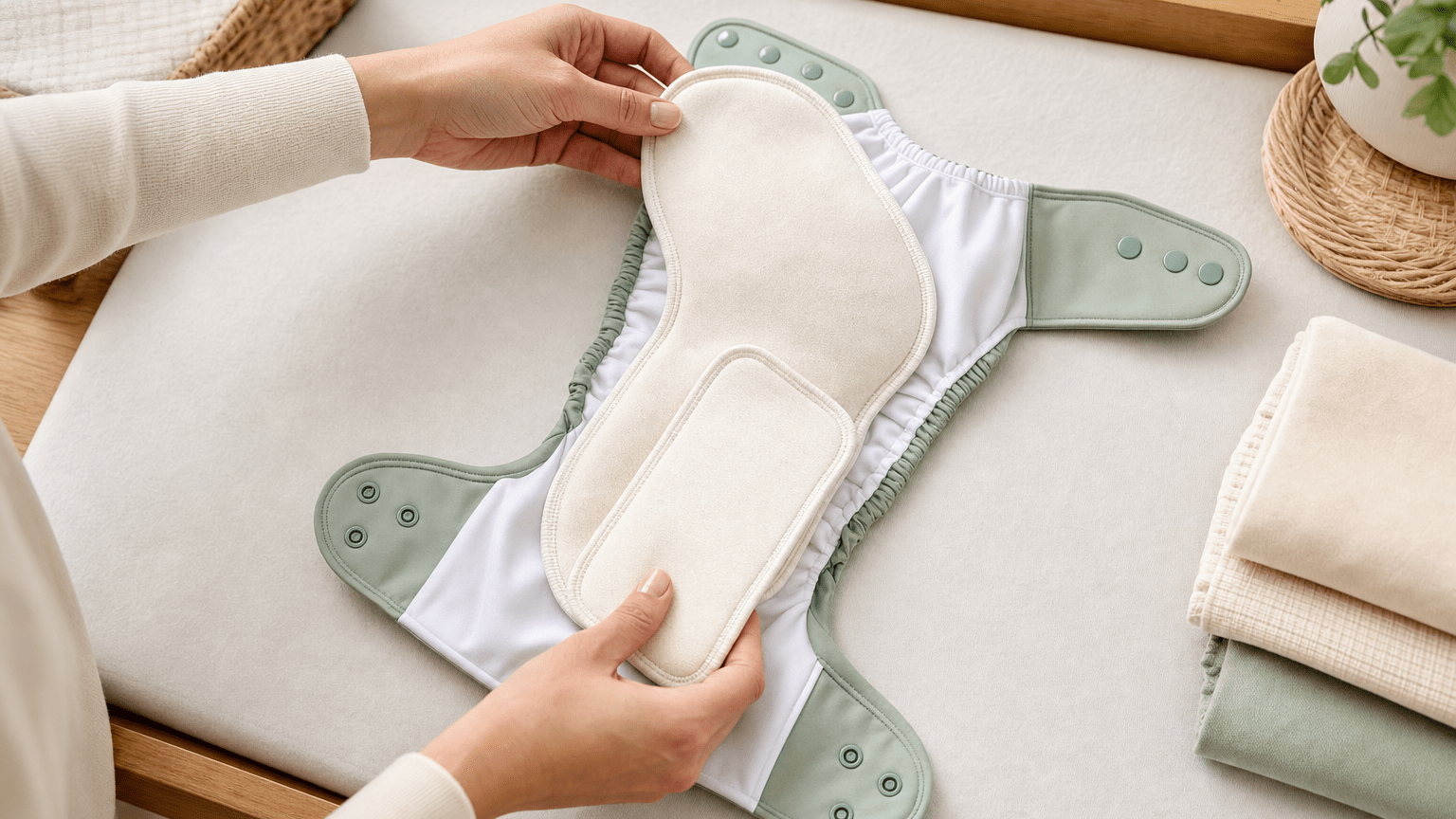
Myth 3: Cloth diapers always leak and are less effective than disposables

Hands placing an absorbent insert and booster inside a modern pocket cloth diaper.

Common causes of Cloth Diaper Leaks:

A leaking cloth diaper is often a sign that something in the setup needs adjusting — not necessarily proof that reusable diapers cannot work.

Common causes include:

  • The diaper is too small or too large
  • There are gaps around the waist or legs
  • The insert is not positioned correctly
  • The diaper does not contain enough absorbency
  • The diaper has become saturated
  • Changes are happening too infrequently
  • Tight clothing is compressing the absorbent layers
  • Pressure from a car seat or other surface is forcing moisture out
  • The daytime configuration is being used for a longer overnight period

Both excessive looseness and excessive tightness can create problems. A secure fit should sit comfortably around the waist and legs without leaving obvious gaps or causing undue pressure.

Absorbency can be Adjusted:

Many modern systems allow families to change the amount or type of absorbency. Depending on the design, this may involve:

  • Adding another insert
  • Using a booster
  • Choosing a different absorbent material
  • Combining absorbent layers
  • Using a separate overnight configuration

A baby who wets heavily may need a different setup from a baby who wets less. Overnight use may require more absorbency than daytime use, although adding layers can also make a diaper bulkier or slower to dry.

More absorbency is not always the only answer. If an insert is placed incorrectly, the diaper does not fit well or clothing creates compression, adding another layer may not solve the leak.

Neither Cloth nor Disposable Diapers are Leak-proof:

Disposable diapers can also leak or result in blowouts. No diaper category performs perfectly in every situation, and comparisons are only useful when the products are fitted and used appropriately.

Cloth-diaper performance depends on the design, fit, absorbency, change frequency and the baby’s urine output. It is not accurate to say that all cloth diapers are as effective as — or more effective than — all disposables.

If leaks occur, try this troubleshooting sequence:

  1. Check the waist and leg fit.
  2. Look for gaps or signs that the diaper is too tight.
  3. Confirm that the insert is correctly positioned.
  4. Check whether the diaper is saturated.
  5. Consider whether more or different absorbency is needed.
  6. Look for compression from clothing, a car seat or another surface.
  7. Use a separate configuration if daytime absorbency is not enough overnight.

Myth 4: Cloth diapers are always more expensive

Cloth Diapers may become economical with repeated use, but there is no single answer that applies to every household. The financial result depends on how much you spend initially, how often the diapers are used, what laundry costs locally and how long the products remain usable.

Why the comparison is not simply “Buy Once versus Buy Repeatedly”:

Cloth Diapering usually requires a larger upfront purchase. The initial cost may include diapers, inserts, covers, storage bags and other accessories.

Reusable products can then be used repeatedly. Their value may improve if they are:

  • Used for a longer diapering period
  • Passed to another child
  • Resold while still in suitable condition
  • Repaired rather than replaced
  • Purchased second-hand when their hygiene and condition can be assessed safely

Disposable diaper costs accumulate over time, but they also vary. Local prices depend on brand, size, promotions, usage rate and the length of the diapering period.

Costs to include in a Fair Comparison:

For Cloth Diapers, consider:

  • Diapers, inserts and covers
  • Wet bags or storage equipment
  • Detergent
  • Water and wastewater charges
  • Electricity, gas or fuel
  • Drying costs
  • Replacement elastics, inserts or covers
  • Optional liners, boosters and reusable wipes
  • Paid laundry services, where applicable

For disposables, consider:

  • Number of diapers used
  • Local cost per diaper
  • Brand and size changes over time
  • The number of months or years of use
  • Wipes and creams, if these are included in the comparison
  • Disposal costs, where relevant
  • Discounts, subscriptions or bulk purchases

A family with reliable machine washing and line-drying space may face a very different total cost from a household that relies on paid laundry, frequent heated drying or expensive utilities.

Calculate your own likely Cost:

A useful comparison can use these formulas:

Total Disposable Cost: `Number of diapers used × local cost per diaper + related supplies`

Total Cloth Cost: `Initial kit + accessories + replacements + laundry costs − resale or reuse value`

Laundry Cost: `Water or sewer cost + electricity or fuel + detergent cost + drying cost`

To make the comparison meaningful, use the same diapering period for both systems. State your assumptions, including:

  • Approximate changes per day
  • Number of months being compared
  • Size of the cloth-diaper kit
  • Wash frequency
  • Machine or hand-washing method
  • Detergent quantity
  • Line drying or heated drying
  • Replacement and repair costs
  • Whether the diapers will be reused for another child

For example, a family might compare the expected cost of using cloth for daytime changes over six months with the cost of buying disposable diapers for those same daytime changes. That result would be an illustration for that household – not a universal promise.

If savings are an important reason for switching, track actual spending for one or two months. Record disposable purchases or cloth laundry costs rather than relying only on estimated figures.

In India, the calculation may be particularly sensitive to water availability, water hardness, electricity reliability, monsoon drying conditions, local product prices and access to replacement inserts or elastics. These factors can differ substantially between households and locations.

Myth 5: Cloth diapering is all-or-nothing - or only works for certain ages and caregivers

Adult hands storing clean, dry reusable cloth diapers in a woven basket beside a washing machine and drying rack.

Part-time Cloth Diapering is a Valid Approach:

You do not have to choose between using cloth for every change and not using it at all.

Part-time approaches may include:

  • Cloth Diapers during the day
  • Cloth Diapers at home
  • Cloth Diapers on weekends
  • Cloth Diapers when laundry capacity allows
  • Disposables overnight, during travel or for specific activities

Families may keep disposables available for travel, illness, emergencies, childcare or periods when laundry is not manageable. Limited cloth use can still reduce the number of disposable diapers purchased, although the financial and environmental effect depends on how often the reusable diapers are actually used.

Part-time use can also be a practical way to test whether a particular system suits your baby before investing in a larger collection.

Different Caregivers may need Different Systems:

Talk through the routine with partners, relatives, babysitters and childcare providers. Make sure they know:

  • How the diaper fastens
  • Where inserts go
  • What to do with a used diaper
  • How soiled diapers should be handled
  • Which products or instructions to follow

Childcare policies vary, so confirm acceptance in advance rather than assuming that a provider will accept or reject cloth diapers. A simpler system may be more realistic for a caregiver who uses reusable diapers only occasionally.

Cloth Diapers can suit different Developmental Stages:

There is no universal age at which cloth diapers stop being suitable. They can generally be used across newborn, infant and toddler stages when the product fits securely and provides enough absorbency for the child’s current needs.

However, age and weight ranges are product-specific. A newborn may need a newborn-sized diaper or a smaller configuration, while an older baby or toddler may require a larger size or additional absorbency. Growth, changing urine output and longer periods between changes can all affect the setup.

Always check the manufacturer’s sizing information rather than assuming that one product will fit every child from birth to toilet learning.

Cloth Diapering is also not a parenting identity. Families may choose reusable diapers for cost, convenience, waste reduction, personal preference or simply because a part-time arrangement suits them. There is no single type of parent who uses cloth.

What actually determines whether cloth diapers work for your household?

The success of Cloth Diapering usually depends on practical details rather than on a simple cloth-versus-disposable label.

Consider:

  • Which diaper style feels manageable?
  • Who will change the diaper for the baby?
  • How well does the diaper fit around the waist and legs?
  • How often does your baby wet?
  • Will you need separate daytime and overnight configurations?
  • Do you have access to a washing machine or a practical hand-washing routine?
  • Can your machine handle the recommended wash method?
  • Is water consistently available?
  • Does hard water affect residue, odour or absorbency?
  • How much drying space do you have?
  • Does your climate allow reliable line drying?
  • During humid or monsoon periods, can diapers dry fully?
  • How will used diapers be stored?
  • Can you prevent damp storage or mould?
  • What will replacements, repairs and laundry add to the cost?
  • Will the diapers be used for another child?
  • What will happen during travel, illness or childcare?

A sensible starting plan is to:

  1. Buy or borrow a small trial kit.
  2. Test the fit on your baby.
  3. Try the absorbency during normal daytime use.
  4. Work out how used diapers will be stored.
  5. Test the wash-and-dry routine.
  6. Ask every regular caregiver for feedback.
  7. Expand the collection only if the routine remains manageable.

Keep a simple record of leaks, drying time, changes, laundry requirements and caregiver experience. This will tell you more about whether cloth works for your household than a general claim about reusable diapers.

Are cloth diapers better for the environment?

Cloth Diapers reduce the number of disposable diapers discarded, but that is only one part of their environmental impact.

Reusable Diapers also require:

  • Water for washing
  • Detergent
  • Electricity or fuel
  • Drying
  • Materials and packaging
  • Replacement parts over time

The overall effect depends on factors such as wash frequency, energy source, drying method, product lifespan, reuse for another child and local waste and wastewater systems.

For example, a long-lasting stash that is washed efficiently and line-dried may have a different impact from a collection that is frequently replaced and dried using heated appliances. A household in a sunny climate may have different drying conditions from one in a humid area. During monsoon weather, longer drying times may affect practicality and storage.

Part-time use reduces disposable consumption, but it does not automatically guarantee a particular environmental outcome. It is more accurate to say that cloth diapers change the balance between disposable waste and laundry-related resource use. The result depends on how they are made, used, washed, dried and kept in service.

Frequently Asked Questions

How often should Cloth Diapers be changed?
Cloth Diapers need regular changes, but there is no single interval that suits every baby. Timing depends on the baby’s urine output, the diaper’s absorbency, the child’s age and whether the diaper is approaching saturation. Change the diaper before it becomes uncomfortably wet or begins leaking.
How often should Cloth Diapers be Washed?
Some routines use washing every two to three days, but this is an example rather than a universal rule. The appropriate schedule depends on the number of diapers you own, storage conditions, climate, machine capacity, water access and manufacturer guidance. Used diapers should not be left damp for prolonged periods, and clean diapers should be completely dry before storage.
Can Cloth Diapers be used Overnight?
Yes, some families use cloth diapers overnight. However, overnight use may require additional absorbency, a booster or a different configuration from daytime use. Tight clothing or pressure from sleeping positions can contribute to compression leaks, and some babies may still need more frequent changes.
Are Cloth Diapers suitable for Newborns and Toddlers?
They can be, provided the product fits the child securely and offers enough absorbency. Newborn, infant and toddler needs may require different sizes or configurations. Check the product’s age and weight guidance rather than assuming that every cloth diaper fits every stage.
Can Cloth Diapers be used while Travelling or when a Baby attends Daycare?
They can be used part-time, but the practical choice depends on the travel arrangements and childcare provider. Some families use disposables when travelling or during illness. If you want to use cloth at daycare, confirm the provider’s policy in advance and explain the storage and changing routine clearly.
Is part-time Cloth Diapering worth trying?
Part-time use can be worthwhile if it fits your routine. It may reduce disposable consumption while avoiding the pressure of managing cloth for every change. Whether it saves money or has a meaningful environmental effect depends on how often you use cloth, the cost of your kit and the cost of washing and drying it.

The Bottom Line

The five common myths about Cloth Diapers are too broad to serve as reliable rules.

Modern Cloth Diapers can be manageable, hygienic and absorbent when they fit correctly, are changed regularly and are cared for through an effective wash-and-dry routine. They can also involve preparation, troubleshooting and laundry that will not suit every household.

Cloth Diapers are not automatically cheaper, greener, easier or more effective than disposables. Their financial and environmental outcomes depend on local prices, water and energy use, drying conditions, product lifespan, maintenance and reuse.

They are also not inherently unhygienic, impossible to use or restricted to a particular kind of parent. A full-time, daytime, home-only or weekend approach can all be valid.

Start with a small trial kit, choose a system that the actual caregivers can use confidently and test the fit, absorbency and laundry routine before buying more. Keep disposables available for travel, illness, emergencies or childcare if needed. The best diapering approach is the one that keeps your baby comfortable and works realistically for your family.

Leave a Reply

Your email address will not be published. Required fields are marked *

one × one =

Our Mother's Day Sale is LIVE NOW!  |  Sale ends TODAY at 12:00 am (IST)  |  Use Code - HMD10

Hello! Our Store will remain Closed from July 24 - July 26, 2026, but You can still Place Orders | All Orders will be Processed from Monday, July 27 onwards!