- Baby Bedding & Room Decor
-
-
Swaddle Wrappers

-
Blankets
-
Bed & Mattress Protector
-
-
- Bath Care
-
-
Napkins & Washcloths
-
Bath Towels
-
-
- Clothing and Accessories
-
-
Baby Suits
-
Night Suits
-
Tops & Vests
-
-
- Diapering & Nappy Changing
-
-
Diaper Inserts
-
Diaper Pants
-
-
- Feeding
-
-
Aprons & Bibs
-
Fruits & Food Feeders
-
Sipper Bottles
-
Teethers & Pacifiers
-
-
- Others
-
-
Hair Brushes & Combs
-
Nail Care
-
Toothbrushes
-
-














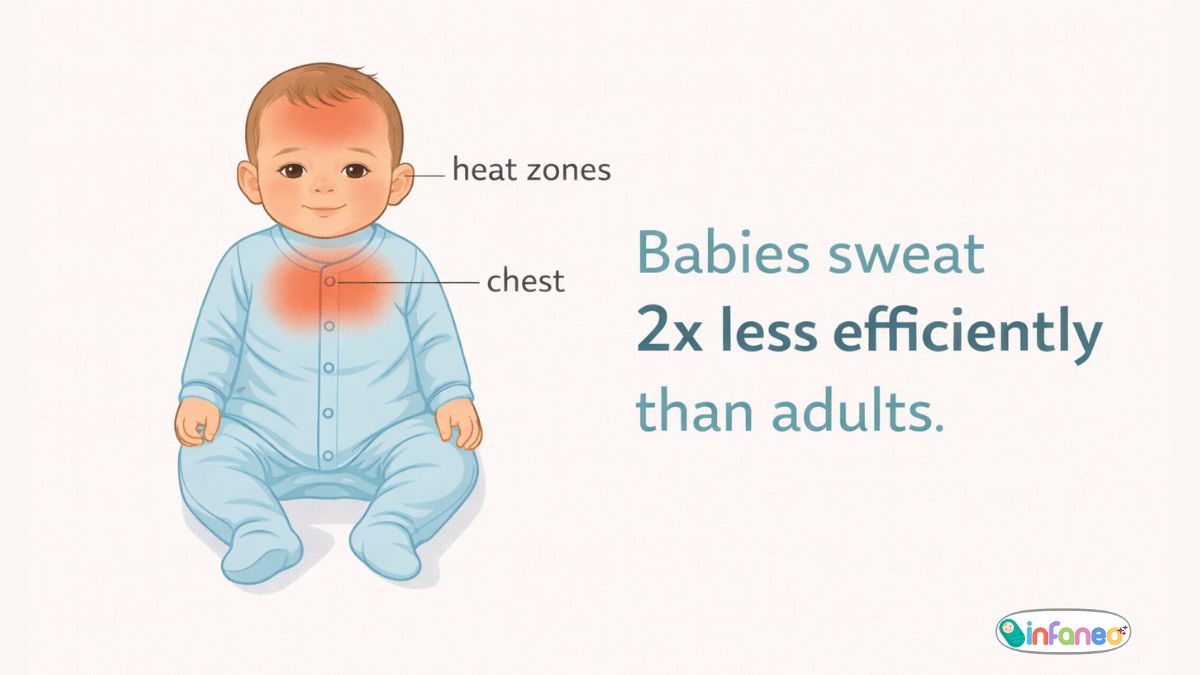
Before we talk about fabrics, we need to understand biology. Babies are not just miniature adults. Their sweat glands are not fully developed, meaning they cannot cool themselves down efficiently.
When a baby gets too hot, they don’t just kick off the covers like we do. They get heat rash ( prickly heat ), become irritable, and in severe cases, face a risk of SIDS ( Sudden Infant Death Syndrome ). This makes breathable bedding a non-negotiable safety essential, not a luxury.
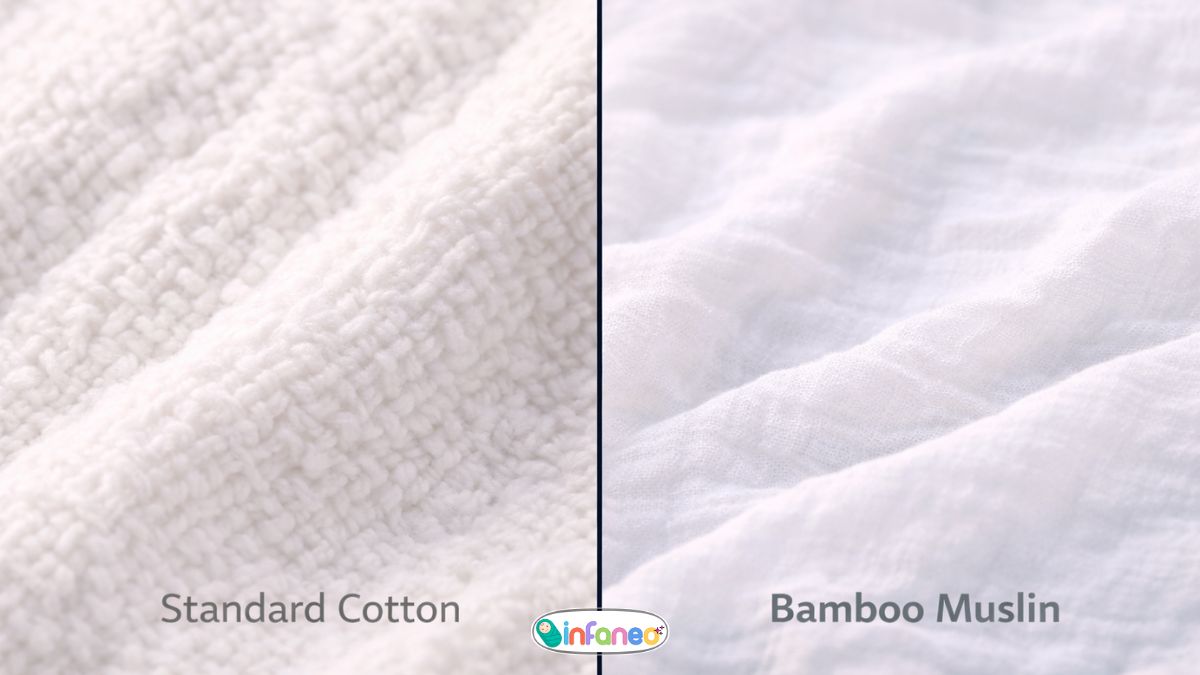
Let’s break down the differences that actually matter for your baby’s sleep.
1. Breathability ( The “Airflow” Factor ):
- Cotton: Standard cotton is breathable, but heavy weaves ( like quilt or flannel ) trap heat. It can get damp with sweat and stay damp, making the baby cold later.
- Bamboo: Bamboo fiber has micro-gaps that allow air to flow freely. It is thermo-regulating, meaning it keeps the baby cool when it’s hot and warm when it’s cold.
2. Moisture Wicking ( The “Sweat” Factor ):
- Cotton: Absorbs sweat but holds onto it. A sweaty cotton blanket feels heavy and wet.
- Bamboo: Wicks moisture away from the skin 40% faster than cotton. Your baby stays dry, even if they sweat during a nap.
3. Softness ( The “Touch” Factor ):
- Cotton: Starts slightly stiff and needs multiple washes to soften.
- Bamboo: Feels like silk or cashmere right out of the box. Its round fiber structure means zero irritation for eczema-prone skin.
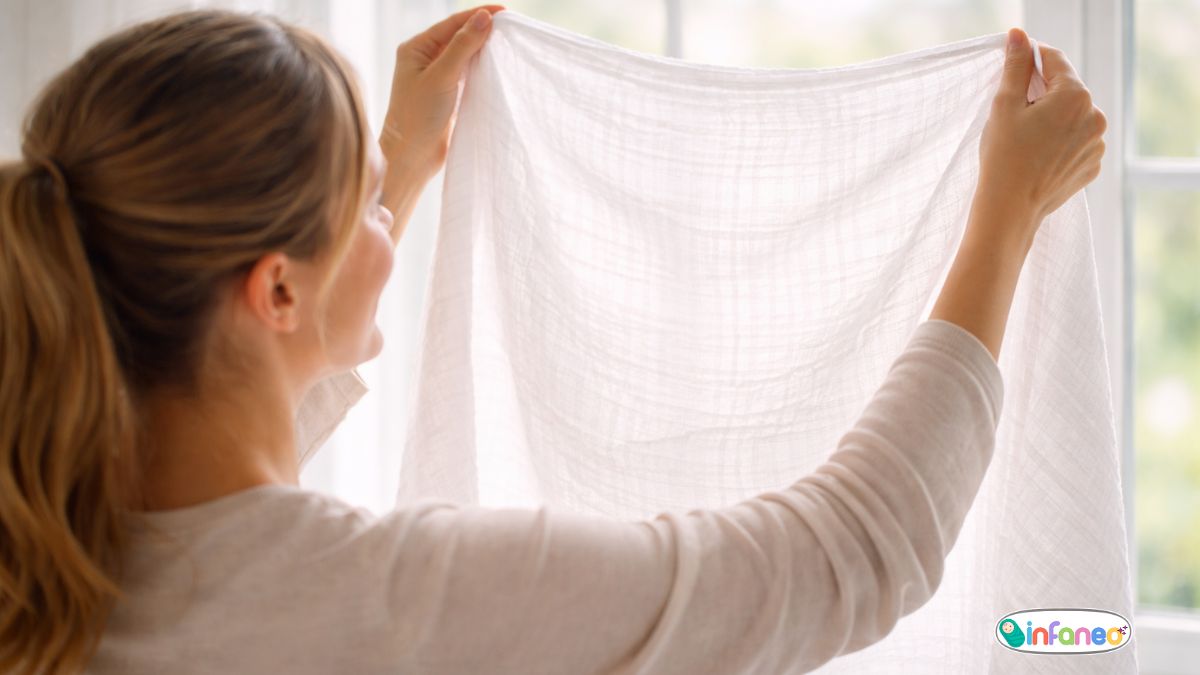
Not sure if your current blanket is safe? Try this simple test:
- Take the blanket and hold it up to your face.
- Gently blow air through the fabric against your hand.
- Result: If you can feel the air on your hand easily, it’s safe for sleep. If you have to blow hard, it’s trapping too much heat.
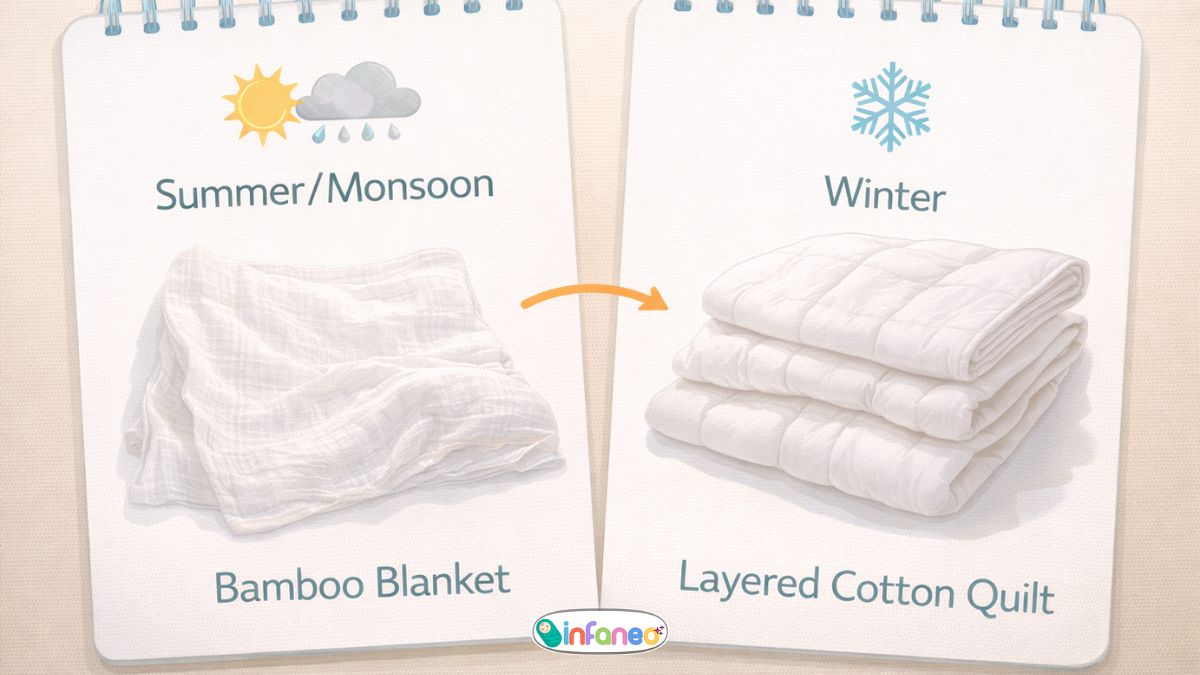
We aren’t saying ditch cotton entirely. It has its place.

Hi, I’m Poco! I’m the Chief Cuddle Officer here. My job is to make sure every fabric is cloud-soft and every nap is cosy. When I’m not testing bamboo blankets, I’m helping parents navigate the messy, magical world of newborns with zero stress.